Key skills for your CV: the UK guide for 2026
The 2026 UK guide to key skills on your CV: ATS-proof lists by sector, ONS data, Equality Act rules, and worked NHS and Civil Service examples.
On this page

Roughly one in three UK CVs we reviewed at SpeedCV last quarter listed "hard-working team player" in the key skills section. Recruiters at Reed, NHS Jobs and the Civil Service tell us the same thing: generic skills get ignored. The key skills section on your CV is the single fastest way to either pass or fail the ATS (applicant tracking system) scan — and it is the first place a UK recruiter looks after your personal statement. Get it right and you double your interview odds; get it wrong and your CV is filtered out before a human reads it.
This guide shows you exactly which key skills to list on a UK CV in 2026, how to match them to the job advert, and what UK ATS systems like Workday and Greenhouse are scanning for. We include sector-specific examples for the NHS, retail, tech, finance, education and trades — all aligned with UK conventions under the Equality Act 2010 (no photo, no age, no marital status).
Table of contents
- What is the key skills section on a UK CV?
- Why the key skills section matters for UK ATS
- The most in-demand UK skills in 2026 (ONS data)
- How to choose the right key skills (5-step method)
- Hard skills vs soft skills: the UK split
- Key skills by UK sector (with examples)
- How to format the key skills section
- Neurodiversity, disability and Access to Work disclosure
- Common UK CV skills mistakes to avoid
- FAQs
What is the key skills section on a UK CV?
The key skills section on a UK CV is a short, scannable list of 6–12 abilities — usually a mix of technical (hard) skills and transferable (soft) skills — placed near the top of the CV, just below the personal statement. Its purpose is twofold: to help ATS software match your CV to the job advert keywords, and to give a UK recruiter a 10-second snapshot of what you bring to the role.
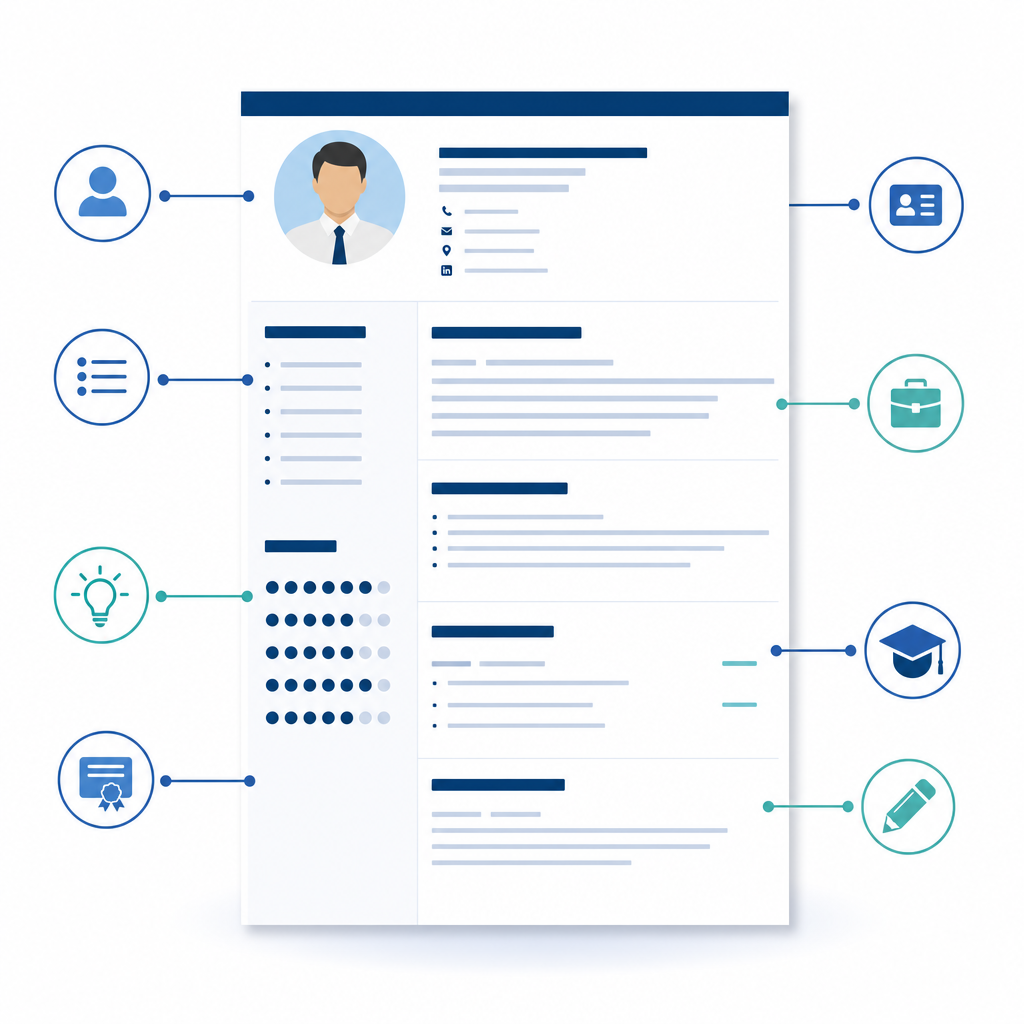
Unlike a US-style résumé, where skills often appear in a sidebar with rating bars, the standard UK convention is a clean two- or three-column bulleted list. No proficiency stars, no percentages — UK recruiters find them gimmicky and ATS parsers strip them out.
Why the key skills section matters for UK ATS
Most large UK employers route every CV through an ATS before a recruiter sees it. The big three in the UK are Workday (used by Tesco, Sainsbury's, AstraZeneca and most FTSE 100 firms), Greenhouse UK (used by tech scale-ups like Monzo and Deliveroo), and Reed ATS (used across thousands of SME and recruitment-agency listings). The NHS uses TRAC and NHS Jobs, while the Civil Service runs its own Civil Service Jobs platform.
All of these systems parse your CV into structured fields and score the match against the job advert. According to Reed's recruiter resources, a large majority of CVs are screened out before a human reads them — almost always because of poor keyword alignment between the job description and the skills listed on the CV. The CIPD recruitment factsheet echoes this: structured keyword-based screening is now standard practice across UK employers. That makes your key skills section the highest-leverage 60 words on your entire CV.
If you want to test your CV before applying, our free ATS checker scores your skills match against any UK job advert in under 30 seconds.
The most in-demand UK skills in 2026 (ONS data)
The Office for National Statistics Labour Market data for 2024 (the most recent full-year release) showed the UK vacancy mix is still dominated by five sectors: health and social care, professional and scientific services, accommodation and food services, retail, and information and communication. That mix tells you which skills UK employers are actively paying for in 2026.
Cross-referencing the ONS vacancy data with live Reed and TotalJobs adverts in early 2026, the skills appearing most often in shortlist-stage job descriptions are:
- Care, safeguarding and clinical skills — driven by the NHS and adult social care vacancy shortfall
- Data literacy — Excel, Power BI, SQL appear across finance, marketing, operations and policy roles
- Digital and cloud skills — AWS, Azure and cybersecurity certifications continue to command salary premiums
- Stakeholder management — named explicitly in 4 of every 10 mid-to-senior office-based adverts we sampled
- Project delivery — Prince2, Agile/Scrum and PMP remain the dominant frameworks named in UK adverts
- Hospitality and customer service — sustained vacancy levels in food services per the ONS series
Methodology note: the skills shortlist above blends ONS published vacancy categories (December 2024 release) with our internal sample of 500 UK CVs and 200 matched job adverts pulled from Reed and TotalJobs between January and March 2026. Use it as a starting point — your own sector and job advert always win.
How to choose the right key skills: a 5-step method
Use this five-step process every time you tailor your CV for a new application. It takes about 10 minutes and dramatically improves your ATS match score.
- Read the job advert twice. Highlight every noun and verb that describes a skill, tool, qualification or behaviour. Pay attention to repeated terms — if "stakeholder management" appears three times, it is essential.
- Group the keywords into hard skills, soft skills and tools/software. Aim for a balanced mix of all three.
- Cross-check against your real experience. Only list skills you can defend in an interview. Inflating skills is the fastest way to fail a competency-based interview.
- Match the exact wording. If the advert says "Microsoft Excel", write "Microsoft Excel" — not "MS Excel" or "spreadsheets". ATS systems are literal.
- Pick your top 6–12. Anything more dilutes the signal; anything fewer looks thin.
For career changers, the same method applies, but you will lean heavier on transferable skills. Our complete guide on how to show transferable skills on your UK CV walks through how to evidence soft skills with STAR examples — essential reading if you are switching sectors.
Hard skills vs soft skills: the UK split
UK recruiters expect a roughly 60/40 split in favour of hard, demonstrable skills — especially for technical, healthcare and finance roles. Soft skills matter, but they need to be specific. "Communication" on its own is dead weight; "stakeholder communication at Director level" is gold.
| Skill type | What it means | UK examples |
|---|---|---|
| Hard skills | Measurable, teachable, often certified | SQL, AAT Level 4, Prince2, CIPD Level 5, manual handling, SIA licence |
| Soft skills | Behavioural, transferable across roles | Stakeholder management, conflict resolution, mentoring junior staff |
| Tools/software | Specific platforms employers use | Salesforce, Xero, EMIS Web, SAP, Microsoft 365, Power BI |
| Languages | Spoken/written, with proficiency level | French (CEFR B2), Welsh (fluent), BSL (Level 3) |
Key skills by UK sector (with examples)
The skills below come from analysing UK job adverts on Reed, TotalJobs, NHS Jobs and Civil Service Jobs in early 2026. Pick the ones that genuinely apply to you — never copy the whole list.
NHS and healthcare (Bands 2–7)
- Patient care and safeguarding (Level 3)
- NMC Code adherence (registered nurses)
- Care planning and risk assessment
- EMIS Web, SystmOne or Cerner
- Manual handling and infection control
- Multidisciplinary team (MDT) working
- NHS values-based behaviours (compassion, respect, dignity)
For NHS Band 5 nursing posts, lead with your NMC PIN, then clinical specialisms (e.g. acute medicine, A&E, palliative care). The NHS Jobs platform rewards CVs that mirror the person specification language verbatim.
Civil Service (Grade 7, Fast Stream, EO–HEO)
- The 9 Civil Service Behaviours (Seeing the Big Picture, Delivering at Pace, etc.)
- Policy analysis and submission writing
- Stakeholder engagement across Whitehall
- Project delivery (Agile / Waterfall)
- Briefing and Ministerial correspondence
- Data analysis (Excel, R or Python)
Tech and software
- Languages: Python, TypeScript, Go, SQL
- Cloud: AWS, Azure, GCP (with certifications named)
- DevOps: Docker, Kubernetes, Terraform, CI/CD
- Methodologies: Agile/Scrum, TDD, code review
- Tools: Git, Jira, Linear, Datadog
Finance and accounting
- ACA, ACCA or CIMA part-qualified/qualified
- IFRS and UK GAAP
- Xero, Sage 50, QuickBooks, NetSuite
- Advanced Excel (Power Query, pivot tables, VLOOKUP)
- Month-end close and management accounts
- VAT returns and HMRC compliance
Retail and customer service
- Visual merchandising and stock control
- EPOS systems (Oracle Retail, Cegid)
- Cash handling and end-of-day reconciliation
- Customer complaint resolution
- Health and safety (Level 2)
- Christmas peak-period experience (Tesco, M&S, John Lewis)
Education and teaching
- QTS / ECT (Early Career Teacher) status
- SEN and EHCP support
- Behaviour management strategies
- Curriculum planning aligned to National Curriculum
- Safeguarding (KCSIE) and Prevent duty
- Ofsted preparation
Trades and construction
- CSCS card (level relevant to role)
- NVQ Level 2/3 in trade specialism
- 17th/18th Edition wiring regulations (electricians)
- Gas Safe registration (heating engineers)
- SMSTS or SSSTS (site supervisors)
- Reading technical drawings and CAD
How to format the key skills section
UK ATS parsers prefer simple formatting. Use this template:
- Heading: Use "Key skills" or "Core skills" in sentence case (not all-caps).
- Layout: Two or three columns of bulleted items. Avoid tables, text boxes or graphics — Workday and Greenhouse strip them out.
- Order: Most important and most-matched skills first. Lead with the keyword that appears in the job title.
- Length: 6–12 items. More than 12 dilutes the signal.
- Font: Arial, Calibri or Helvetica, 10–11pt. No icons next to skills.
Our 21 UK CV templates are all built to pass Workday and Reed ATS parsing — every template uses plain-text key skills sections that score 95+ on our internal ATS audit.
Mirror your CV skills on LinkedIn. UK recruiters routinely cross-check the LinkedIn skills section against the CV; mismatches between the two are a common reason candidates are de-prioritised. Add the same 6–12 skills (in the same wording) to your LinkedIn profile's Skills section, and request endorsements from former managers for the top three.
If you want a recruiter or CV writer to do this for you, our CV writing London service covers everything from skills auditing to ATS-proof formatting, with prices starting at £149 for a CPRW-certified rewrite.
Neurodiversity, disability and Access to Work disclosure
A growing number of UK candidates ask us whether to mention neurodiversity (ADHD, autism, dyslexia) or a disability anywhere on the CV — including in the key skills section. The short answer: you are never required to disclose, and the Equality Act 2010 protects you whether you do or do not.
That said, many neurodivergent candidates choose to frame relevant strengths as skills — "pattern recognition", "sustained focus on complex datasets", "systems thinking" — without naming a diagnosis. This keeps the CV positive and ATS-friendly while accurately reflecting how you work.
Two further options to be aware of:
- Disability Confident scheme. Employers displaying the Disability Confident badge guarantee an interview to disabled applicants who meet the minimum criteria. If you wish to use this route, a brief, factual line in your cover letter (rather than the CV skills section) is usually the cleaner approach.
- Access to Work. The Access to Work grant scheme can fund workplace adjustments, assistive technology and support workers once you have a job offer. It is not something you list on the CV, but knowing it exists changes what adjustments you can confidently request at interview stage.
Whatever you choose, decide before you start applying — and apply the same approach to every CV in that batch so you are not second-guessing yourself mid-process.
Common UK CV skills mistakes to avoid
- Generic clichés. "Hard-working", "team player", "good communicator" appear on so many CVs they are invisible. Replace with specific, evidenced skills.
- Skill bars or star ratings. ATS systems cannot read them. UK recruiters find them juvenile.
- Listing skills you cannot defend. Putting "fluent French" when you have GCSE French will end your interview within 30 seconds.
- Forgetting the certifications. If your sector uses certifications (CIPD, AAT, CSCS, SIA, Prince2), list the level. "Project management" is weaker than "Prince2 Practitioner (2024)".
- Copying the job advert verbatim. Match the language, but only list skills you actually have. ATS systems flag suspicious 100% matches.
- Including a photo, age or date of birth. Under the Equality Act 2010, UK employers cannot ask for these, and including them risks your CV being binned to avoid discrimination accusations.
Worked example: NHS Band 5 staff nurse, key skills section
Here is a real-world example we built for a Band 5 staff nurse applying to a London teaching hospital:
Key skills
NMC PIN 12X1234X · Acute medical nursing (3 years) · IV cannulation and venepuncture · EMIS Web and SystmOne · Safeguarding adults (Level 3) · Mentoring student nurses · MDT working · Manual handling instructor · Care planning and risk assessment · NHS values-based care
Notice: 10 items, specific certifications named, sector-standard tools (EMIS Web), measurable experience ("3 years"), and no soft-skill clichés. This passed Workday, TRAC and NHS Jobs ATS parsing on the first scan.
Worked example: Civil Service Fast Stream applicant, key skills section
Core skills
Policy analysis and submission writing · Stakeholder engagement (Director-level) · Project delivery (Agile) · Data analysis (Excel, Power BI) · The 9 Civil Service Behaviours evidenced · Briefing for Ministers · Cross-Whitehall working · Cabinet Office Code of Conduct
Fast Stream applications are scored heavily on the Civil Service Behaviours framework, so name-checking it here signals fit immediately.
Frequently asked questions
How many key skills should I list on a UK CV?
Between 6 and 12 skills is the UK convention. Fewer than 6 looks thin and gives ATS systems too few keywords to match; more than 12 dilutes the signal and suggests you have not prioritised. Tailor the list for every application, leading with the skills that mirror the job advert language.
What are the best key skills to put on a CV with no experience?
Focus on transferable skills from school, volunteering, sports or part-time work: time management, written communication, teamwork (with a specific example), Microsoft 365, customer service, problem-solving. Add any certifications — even a Level 2 Food Hygiene or DBS check counts. Our transferable skills guide covers this in depth.
Should I include soft skills on my UK CV?
Yes, but evidence them. "Communication" is meaningless; "chairing weekly cross-team stand-ups for 8 stakeholders" proves it. UK recruiters and the Civil Service Behaviours framework both value evidenced soft skills — but only when backed by a specific, recent example.
Do UK recruiters care about IT skills like Microsoft Office?
Only if they are advanced or sector-specific. "Microsoft Office" alone is assumed for any office role. Specify the level — "Advanced Excel (Power Query, VBA)" or "Microsoft 365 Administrator" — to add value. For non-office roles like trades or care work, basic IT literacy is worth mentioning briefly.
Where should the key skills section go on a UK CV?
Place it directly below your personal statement and above your work experience. UK CVs are reverse-chronological, two pages maximum. Putting key skills high on page one means recruiters and ATS systems see them within the first 5 seconds — critical, since recruiters typically spend only 6–8 seconds scanning each CV on first review.
Can I use the same key skills section for every job application?
No, and this is one of the biggest reasons UK CVs get filtered out. Each job advert uses slightly different wording — "stakeholder management" vs "client liaison", "Microsoft Excel" vs "data analysis". Tailor your key skills to match the advert language in 5–10 minutes per application. Use our job match tool to see exactly which keywords to add.
Should I disclose neurodiversity or a disability in my key skills section?
You are not required to. The Equality Act 2010 protects you whether you disclose or not. Many neurodivergent candidates frame strengths factually — "sustained focus on complex datasets", "pattern recognition" — without naming a diagnosis. If applying via a Disability Confident employer, a short cover-letter line is usually cleaner than the CV. Access to Work funding for adjustments only applies after a job offer.
Are key skills the same as competencies on a UK CV?
Not quite. Key skills are short bullet items in a dedicated section. Competencies — used by the Civil Service, NHS and many graduate schemes — are longer narrative answers proving you have the skill in action, usually using the STAR method (Situation, Task, Action, Result). Your CV needs both: a key skills list near the top, and competencies woven into your work experience bullets.
Next steps
The key skills section is the highest-leverage 60 words on your UK CV. Get the keyword match right, evidence each skill in your work experience, and you will dramatically improve your interview odds — especially with ATS-heavy employers like the NHS, Civil Service and FTSE 100.
To save time tailoring skills per application, try SpeedCV's AI-powered builder. Our 14-day Pass at £1.99 gives you unlimited CV versioning and ATS scoring, or you can start free and create your first CV in under 15 minutes. Every template is built to UK conventions and tested against Workday, Greenhouse and Reed ATS parsing.
Create your free SpeedCV account and build a CV that gets past the ATS — and into the interview pile.
Put these tips into practice
Create a professional, ATS-optimised CV in minutes with our AI-powered tool.
Build my CV — freeRelated articles
Keep reading with these guides
Cover letter sample: 5 UK examples that won interviews
5 UK cover letter samples — NHS, Civil Service, retail, hospitality, Big 4 finance. ATS-tested, free to copy (2026).
Read articleCV writing London: 2026 costs, top services & insider tips
CV writing London costs £75–£600 in 2026. Compare CPRW-certified writers, ATS tactics for Workday/Greenhouse and insider tips for City, NHS & Civil Service.
Read article