First job CV UK: school and A-level leaver guide (2026)
Write a first job CV UK employers will read. School and A-level leaver examples, NHS, retail, Civil Service templates and ATS tips for 2026.

Over 320,000 young people aged 16 to 24 left UK education in 2025 without a confirmed next step, according to ONS Labour Market data. If you're a school leaver, A-level leaver, or sixth-form finisher hunting your first paid role, your CV is the single biggest lever you have. The good news: a strong first job CV UK employers actually read doesn't need years of work history—it needs the right structure, plain English, and proof you can show up, learn fast, and represent the business. This guide walks you through every section, with real UK examples from Tesco Christmas temp roles to NHS apprenticeships and the Civil Service Fast Track Apprenticeship.
Table of contents
- What a first job CV in the UK actually is
- How long should your first CV be?
- The 7 sections every UK school leaver CV needs
- Personal statement examples for school and A-level leavers
- UCAS personal statement vs job CV personal statement
- How to write experience when you have none
- Scottish, Welsh, and Northern Irish qualifications on a UK CV
- Pay expectations: what to expect under 18 and on apprenticeships
- Beating the ATS: what UK recruiters scan for
- Real UK first job CV examples (retail, NHS, apprenticeship)
- Pairing your CV with a strong cover letter
- What if you don't land a role straight away?
- Common mistakes that bin your CV in seconds
- Frequently asked questions
What a first job CV in the UK is
A first job CV UK is a one to two-page document that summarises your education, skills, and any voluntary, school, or part-time experience for a UK employer. Unlike a US resume, it does not include a photo, your age, marital status, or nationality (Equality Act 2010 means recruiters actively avoid these). It uses British English, DD/MM/YYYY dates, and reverse-chronological order—newest first.
How long should your first CV be?
For a first job application in the UK, aim for one page. The standard UK CV is two pages, but if you're 16 to 19 with limited experience, one well-structured page beats two padded pages every time. Recruiters at Reed and TotalJobs report spending an average of 6 to 8 seconds on a first scan—white space and clear headings matter more than volume.
Rule of thumb: if you're under 21 and applying for entry-level, apprenticeship, or retail roles, one page. If you've completed a year in college plus a placement, two pages is acceptable.
The 7 sections every UK school leaver CV needs
Use this exact order. UK recruiters and Applicant Tracking Systems (ATS) like Workday, Greenhouse, and Reed ATS expect a predictable structure.
- Contact details — full name (as H1), city and postcode (no full address), mobile number, professional email ([email protected], not partyanimal2007@…). Add LinkedIn URL if your profile is complete.
- Personal statement — 3 to 4 sentences, 60 to 100 words. Who you are, what you're applying for, what you bring.
- Education — school/college name, dates (DD/MM/YYYY), qualifications with predicted or achieved grades.
- Work experience — paid, voluntary, school placements, weekend jobs. Treat every entry the same.
- Key skills — 6 to 10 bullets mixing hard skills (Microsoft Excel, Canva, basic Python) and soft skills (teamwork, timekeeping, customer service).
- Achievements and activities — Duke of Edinburgh, NCS, sports captain, school council, volunteering at a charity shop.
- References — write "Available on request" or omit. Never include personal details of referees without consent.

What to leave OFF your UK first CV
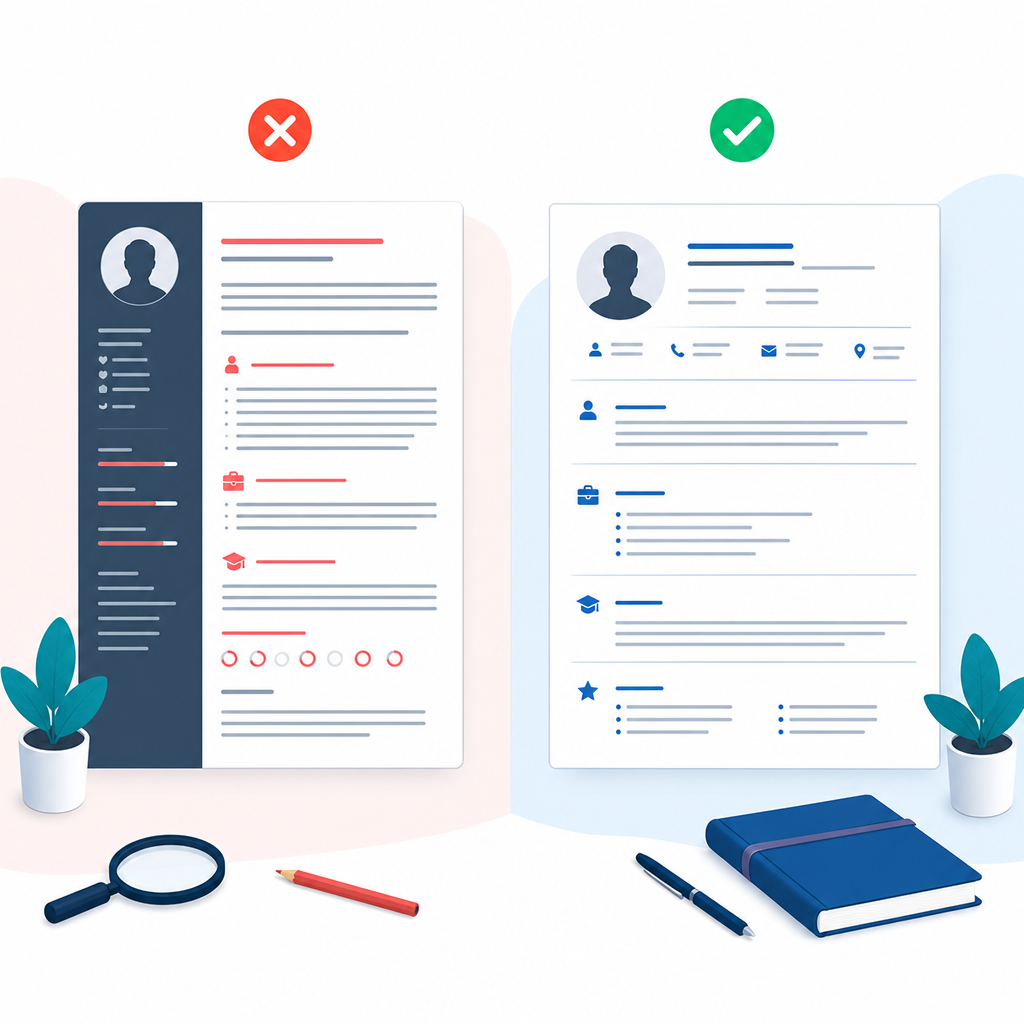
- Photo or headshot (Equality Act 2010 risk)
- Date of birth, age, or year of birth
- Nationality, marital status, religion
- National Insurance number
- Full home address (city + postcode is enough)
- "CV" or "Curriculum Vitae" as the document title—your name is the title
Personal statement examples for school and A-level leavers
The personal statement is the first thing a hiring manager reads. Keep it 60 to 100 words and tailor it to each application.
Example 1 — A-level leaver applying for a Tesco Christmas temp role
Reliable A-level leaver (Maths, Business, Psychology) with a year of weekend volunteering at a local Oxfam shop. Comfortable on a till, restocking shelves, and helping customers find what they need. Known for turning up early and staying calm during busy Saturday rushes. Looking to bring the same energy to the Tesco Christmas team while saving for a Level 3 Business apprenticeship.
Example 2 — Year 11 leaver applying for an NHS Healthcare Cadet apprenticeship
Recent GCSE student (predicted 6s in English, Maths, Biology) with first-hand experience supporting my grandmother through home care. Completed a one-week placement at Royal Berkshire Hospital observing Band 5 nurses on a respiratory ward. Calm, observant, and motivated by the NHS values of compassion and respect. Applying to start the Healthcare Cadet pathway and progress towards a Nursing Associate apprenticeship.
Example 3 — Sixth-form leaver applying for a Civil Service apprenticeship
Sixth-form leaver with A-levels in History, Politics, and English (predicted A*AB), Head of School Council and Duke of Edinburgh Gold. Strong written communication, experience facilitating year-group debates on policy, and genuine interest in public service. Applying to the Civil Service Fast Track Apprenticeship to contribute to operational delivery while completing a Level 4 qualification.
UCAS personal statement vs job CV personal statement
Sixth-form leavers often confuse these—and recycling a UCAS statement into a CV is one of the fastest ways to lose a recruiter. They serve different audiences with different goals.
| Element | UCAS personal statement | Job CV personal statement |
|---|---|---|
| Audience | University admissions tutor | Hiring manager or recruiter |
| Length | Up to 4,000 characters (~600 words) | 60 to 100 words |
| Focus | Academic passion + subject curiosity | What you can do for the employer now |
| Tone | Reflective, exploratory | Direct, evidence-led |
| Tense | Often first-person narrative | Third person or implied subject, present tense |
If you already wrote a UCAS statement, treat it as raw material—not a finished product. Pull out one or two evidence points (a project, a leadership role, a result) and rewrite them in 60 to 100 punchy words aimed at the specific job.
How to write experience when you have none
Every UK school leaver has more experience than they think. The trick is reframing it. Treat each entry like a real job: title, organisation, dates, and 2 to 4 bullet points showing what you did and what changed because of you.
What counts as experience for a first job CV?
- School placements — Year 10 work experience week, sixth-form enrichment
- Volunteering — charity shops, food banks, scouts, church, community sports coaching
- Part-time and casual — babysitting, dog walking, paper round, helping at the family business
- School roles — prefect, peer mentor, sports captain, library monitor, student council
- Awards programmes — Duke of Edinburgh (Bronze/Silver/Gold), NCS, Combined Cadet Force
- Projects — EPQ, A-level coursework with real-world application, Young Enterprise
Use the STAR method in bullet points
UK recruiters love evidence. Each bullet should hint at Situation, Task, Action, Result—even if compressed.
Weak: "Worked in a charity shop."
Strong: "Served an average of 40 customers per Saturday shift at Oxfam Reading, handled cash and card payments, and helped sort over 200 donations a month for the shop floor."
Scottish, Welsh, and Northern Irish qualifications on a UK CV
The UK isn't one exam system. Recruiters at national employers (NHS, Civil Service, Tesco, M&S) see CVs from all four nations and expect you to list your actual qualifications—not translate them into A-levels. Be specific and the recruiter will recognise the level.
| Nation | Pre-16 / Pre-18 qualifications | How to list on your CV |
|---|---|---|
| England & Wales | GCSEs (Year 11), A-levels (Year 13) | "3 A-levels: Maths (A), Business (B), Psychology (B)" + "9 GCSEs grades 9-5" |
| Scotland | National 5s (S4), Highers (S5), Advanced Highers (S6) | "5 Highers: English (A), Maths (B), Biology (B), Modern Studies (B), Geography (C)" |
| Wales | GCSEs + Welsh Bacc (Skills Challenge Certificate) | List Welsh Bacc alongside A-levels — recruiters value it as a leadership/project signal |
| Northern Ireland | GCSEs + A-levels (CCEA board) | List as standard A-levels; mention CCEA only if the employer asks |
If you're applying cross-border (e.g. a Scottish Higher leaver applying to a London graduate scheme), don't "convert" your grades. A clean "5 Highers including English (A) and Maths (B)" is clearer than an estimated A-level equivalent.
Pay expectations: what to expect under 18 and on apprenticeships
Knowing the legal minimum helps you spot a fair offer and negotiate sensibly. From 01/04/2025 the UK National Minimum Wage and Apprentice rates (per gov.uk) are:
| Category | Hourly rate (2025-26) | Typical first-job context |
|---|---|---|
| Apprentice (under 19, or 19+ in first year) | £7.55 | NHS Healthcare Cadet, Civil Service Fast Track Apprenticeship |
| 16-17 year-olds | £7.55 | Tesco/M&S Christmas temp, weekend retail |
| 18-20 year-olds | £10.00 | Full-time retail, hospitality, warehouse |
| 21 and over (National Living Wage) | £12.21 | Most entry-level full-time roles |
A typical NHS Band 2 healthcare assistant role pays around £24,000 to £25,000 a year (per NHS Employers pay scales 2025-26). Don't put salary expectations on the CV itself—save that for the application form or interview, and only when asked.
Beating the ATS: what UK recruiters scan for
Around 75% of UK employers with more than 50 staff now use an Applicant Tracking System—commonly Workday, Greenhouse, or Reed ATS. Your CV is parsed by software before a human sees it. To pass the scan:
- Save as .docx or PDF (not Pages, Canva PNG, or scanned images)
- Use standard section headings: Personal Statement, Education, Work Experience, Skills
- Avoid tables, text boxes, headers, footers, and columns in the heavy-design templates
- Use a clean sans-serif font (Arial, Calibri, Helvetica) at 10 to 12pt
- Include keywords from the job advert—match the language exactly ("customer service" not "client relations" if the ad says the former)
Before you hit submit, run your CV through our free ATS checker to see your match score against any job advert in seconds. For a tailored fit against live UK Reed jobs, our job match tool scores your CV against real vacancies.
Real UK first job CV examples (retail, NHS, apprenticeship)
Comparison: structure by role type
| Role type | Personal statement focus | Lead with | Key skills to highlight |
|---|---|---|---|
| Retail (Tesco, M&S, Sainsbury's) | Reliability + customer-facing | Any cash-handling, volunteering, school council | Customer service, teamwork, punctuality, basic numeracy |
| NHS apprenticeship (Band 2/3) | NHS values: care, compassion, respect | Caring experience (family, placement, volunteering) | Empathy, observation, confidentiality, basic IT |
| Civil Service Fast Track | Public service motivation + STAR examples | Leadership roles, EPQ, debate, DofE | Written communication, analysis, working with others |
| Big 4 school leaver scheme | Commercial awareness + numeracy | Predicted A-levels, Young Enterprise, maths | Excel, problem-solving, attention to detail |
| Hospitality (chef, waiter) | Energy + ability to work weekends | Any food prep, family business, kitchen volunteering | Stamina, food hygiene basics, teamwork under pressure |
If you want a head start, browse our 21 UK CV templates—the Sage template was designed specifically with NHS and education entry-level roles in mind, and the uk-professional template is the most-used by UK school and A-level leavers on SpeedCV. For a deeper walkthrough including a free downloadable template, read our companion guide on the first CV with no experience that beats ATS.
Pairing your CV with a strong cover letter
Most UK entry-level adverts now ask for a covering letter alongside your CV—even for retail Christmas temp roles. A first job covering letter doesn't need to be long: three short paragraphs covering why you want the role, what you bring, and when you can start. Where the CV is a structured snapshot, the covering letter is your chance to sound like a real person.
For sector-specific templates and a step-by-step walkthrough, see our covering letter UK guide, browse 10 free formats by sector in our cover letter template UK 2026 roundup, or pick from the 8 premium cover letter templates built for UK applications.
What if you don't land a role straight away?
Not every school or A-level leaver walks straight into a job. If you're 16 to 18 and out of work and education, Jobcentre Plus offers the Youth Employment Programme with a dedicated work coach. You can also apply for Universal Credit from age 18 (or 16 to 17 in limited circumstances) via gov.uk—being on Universal Credit doesn't appear on your CV and won't be visible to employers.
Use any gap to strengthen your CV: a 4 to 6-week volunteering placement at a charity shop or food bank, a free Open University short course, or a sector-specific qualification like Level 2 Food Safety (around £20 online) all give you something concrete to put under Experience or Achievements.
Common mistakes that bin your CV in seconds
- Including a photo. UK recruiters legally avoid CVs with photos to reduce discrimination risk under the Equality Act 2010.
- Using a Hotmail or joke email. Set up a free Gmail with firstname.lastname.
- Listing GCSE subjects without grades. If grades aren't out yet, write "predicted" and the expected grade.
- One generic CV for every job. Tailor the personal statement and top 3 skills to each advert.
- Spelling and grammar errors. Research by the CIPD shows recruiters routinely reject CVs with typos. Use the gov.uk Style Guide for plain English, run your CV through a UK English spellcheck, and ask an adult to read it aloud.
- American spellings. Writing "organised" with a z instead of an s, or dropping the u in "colour", is an instant red flag in the UK. Always use British English: organised, colour, programme, realise, analyse, centre.
- Padding with irrelevant hobbies. "I enjoy spending time with friends" tells a recruiter nothing. Replace with specific activities that show commitment (e.g. "Captain of school netball team, 2024-2025").
What happens after you submit?
For a typical UK entry-level vacancy at a supermarket or NHS Trust, expect:
- Automated acknowledgement within 24 hours
- ATS sift in the first 3 days—roughly 60-70% of CVs filtered out
- Recruiter review within 7 to 14 days
- First-stage interview (often a 15-minute phone or Teams call) within 3 weeks
If you've not heard back in 3 weeks, a polite follow-up email referencing the job reference number is acceptable. Don't chase before then—UK recruiters consider it overeager.
Build your first UK CV in under 10 minutes
SpeedCV's UK builder was designed so a complete beginner can produce a recruiter-ready CV without needing to format anything. Pick one of our 21 active UK templates, answer guided questions, and the AI tailors your personal statement and bullet points to the role. Try it free, or unlock the full builder for £1.99 with the 14-day pass on our pricing page. Create your free account and have your first job CV ready before tea.
Frequently asked questions
What should I put on my CV for my first job UK?
For your first UK job CV, include: contact details (city + postcode, not full address), a 60 to 100-word personal statement, education with predicted or achieved grades, any work experience including voluntary or school placements, 6 to 10 key skills, and achievements like Duke of Edinburgh or sports captaincy. Leave off photos, age, and date of birth—Equality Act 2010 makes these inappropriate.
How do I write a CV with no experience UK?
Reframe what you have. School work experience weeks, volunteering at a charity shop, babysitting, prefect duties, Young Enterprise, and EPQ projects all count. Use the STAR method in bullet points (situation, task, action, result) and quantify where possible—"served 40 customers per Saturday shift" beats "helped at the till". A strong personal statement compensates for thin experience. Our first CV no experience guide walks through a free template.
How long should a UK CV be for a first job?
One page for school leavers and 16 to 19 year-olds with limited experience. Two pages becomes acceptable once you've completed a college year with a placement, an apprenticeship, or substantial part-time work. Recruiters spend 6 to 8 seconds on a first scan, so a clean one-page CV almost always outperforms a padded two-page version.
Do I need a photo on my UK CV?
No. UK recruiters actively reject CVs with photos because of discrimination risk under the Equality Act 2010. This differs from many European countries (France, Germany, Switzerland) where photos are standard. Stick to your name, contact details, and content—no headshot, no age, no marital status.
Should I include GCSEs on my CV if I'm an A-level leaver?
Yes, but summarise. Write "9 GCSEs grades 9-5 including English Language (7) and Maths (6)" rather than listing every subject. Lead with your A-levels (or Scottish Highers, predicted grades marked "predicted"), then condense GCSEs or National 5s to one line. This saves valuable space for skills and experience.
How much will my first job pay in the UK?
From 01/04/2025, the UK Apprentice rate and 16-17 minimum is £7.55/hour, 18-20 year-olds £10.00/hour, and 21+ National Living Wage is £12.21/hour. NHS Band 2 healthcare assistant roles start around £24,000-£25,000 a year. Don't put salary expectations on the CV itself—wait until the application form or interview.
How do I make my first CV pass the ATS?
Save as .docx or PDF, use standard section headings (Personal Statement, Education, Work Experience, Skills), avoid tables and text boxes, stick to Arial or Calibri at 10-12pt, and match keywords from the job advert exactly. Around 75% of UK employers with 50+ staff use an ATS like Workday, Greenhouse, or Reed ATS. Run your CV through our free ATS checker before submitting.
Key takeaways
- A first job CV UK is one page, two if you have a college placement
- Never include a photo, age, or date of birth (Equality Act 2010)
- Reframe volunteering, school placements, and DofE as real experience using the STAR method
- List your actual qualifications—A-levels, Scottish Highers, Welsh Bacc, CCEA—not estimated equivalents
- Know the minimum wage: £7.55 apprentice/under-18, £10.00 for 18-20, £12.21 for 21+
- Match keywords from the job advert to pass the ATS sift
- Tailor your personal statement to every application—generic statements get binned
- British English only—never American spellings
Ready to write yours? Start your free SpeedCV account, pick a UK template, and let the guided builder do the heavy lifting.
Put these tips into practice
Create a professional, ATS-optimised CV in minutes with our AI-powered tool.
Build my CV — freeRelated articles
Keep reading with these guides
Cover letter sample: 5 UK examples that won interviews
5 UK cover letter samples — NHS, Civil Service, retail, hospitality, Big 4 finance. ATS-tested, free to copy (2026).
Read articleCV writing London: 2026 costs, top services & insider tips
CV writing London costs £75–£600 in 2026. Compare CPRW-certified writers, ATS tactics for Workday/Greenhouse and insider tips for City, NHS & Civil Service.
Read article